The Lights Are On, But No One’s Home
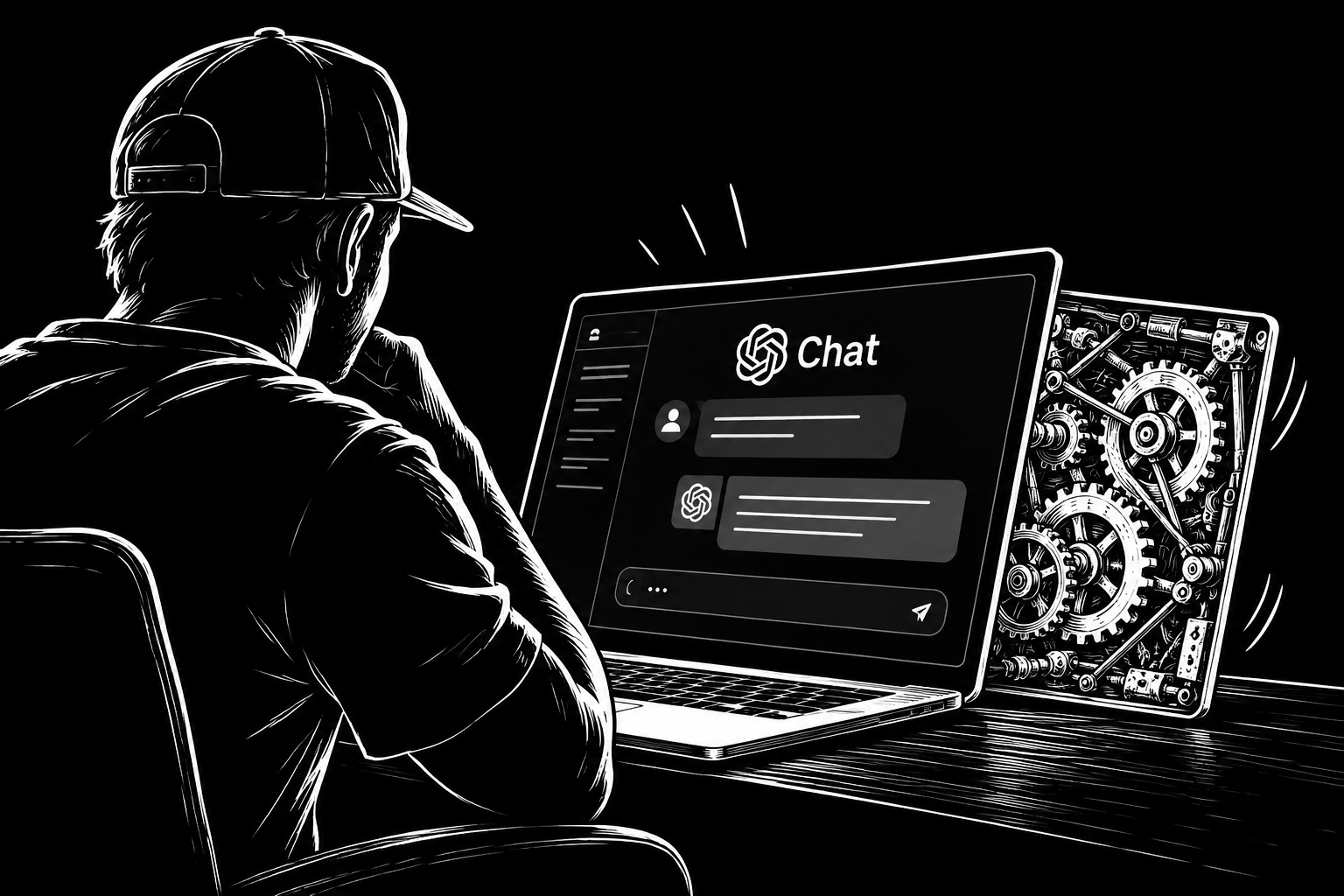
AI can sound like it cares. But what happens when we start telling machines the things we are afraid to tell each other?
“How are you?”
“I’m fine.”
It might be one of the most common lies we tell each other.
Not because we are trying to deceive anyone.
It has simply become a reflex.
Most of us are carrying things we do not know how to talk about.
Money.
Marriage.
Loneliness.
Fear.
Failure.
Doubt.
Parenting.
Work.
Sometimes it is just the feeling that something is not right even when everything looks fine from the outside.
But telling another person how we are actually doing can feel expensive.
What if I bring them down?
What if they do not understand?
What if they judge me?
What if I sound ungrateful?
What if they try to fix something when I really just needed someone to listen?
So we say:
“I’m fine.”
And we keep moving.
Now There Is Somewhere Else to Go
AI.
You can tell it almost anything.
There is no awkward silence.
No uncomfortable look from across the table.
No fear that you are burdening it.
You can sit alone late at night, type something you have never said out loud to another person, hit send, and within seconds receive a thoughtful response.
And sometimes that response can be incredibly helpful.
I use AI regularly.
It is an incredible tool for research, recognizing patterns, developing ideas, organizing thoughts, and helping us find words for things we have struggled to articulate.
Sometimes it might even say exactly what you needed to hear.
But there is something I think we need to remember.
The lights are on, but no one’s home.
It Is Responding, But It Is Not Listening
There is not another person sitting on the other side of that conversation hearing you.
AI can recognize patterns in what you write and generate a response based on patterns learned from enormous amounts of human language.
It can produce language that sounds compassionate.
It can tell you that what you are feeling makes sense.
It can ask another question.
It can encourage you.
It can help you think.
But it does not hurt when you hurt.
It does not worry about you when you close the app.
It does not sit at home later wondering whether you are okay.
It does not love you.
There is an important difference between receiving words that sound like someone cares and actually being cared for.
And I wonder if we are slowly becoming comfortable replacing one with the other.
People Are Harder
Not because technology is bad.
But because people are difficult.
Relationships require something from us.
They require vulnerability.
They require patience.
They require sitting through uncomfortable silence.
They require listening when we do not know what to say.
They require giving someone our time when it would be easier to keep scrolling.
They require the possibility of being misunderstood.
AI requires almost none of that.
Maybe that is exactly why we need to be careful.
Because the easier artificial connection becomes, the easier it may become to avoid the messiness of real connection.
Use the Tool
I do not think the answer is to stop using AI.
I am certainly not going to.
The answer might simply be remembering what it is and what it is not.
Use AI to help you think.
Use it to research.
Use it to create.
Use it to organize your thoughts.
Maybe even use it to help you find the words for something difficult you need to say.
But then go say those words to somebody.
Call your friend.
Tell your spouse what is actually going on.
Sit across from someone without your phone between you.
Ask someone:
“How are you?”
And when they instinctively respond:
“I’m fine.”
Maybe stay there long enough to ask again.
“No, really. How are you?”
And if somebody trusts you enough to tell you the truth, resist the urge to immediately fix them.
Listen.
Be present.
Carry something with them.
Technology can imitate many of the words humans use when we care for each other.
But it cannot actually be there for someone.
We can.
But Even We Have Limits
There is another part of this that I do not want to miss.
People will not always understand us either.
We will disappoint each other.
We will say the wrong thing.
We will not always be available.
Even the people who love us most cannot completely know everything happening inside of us.
Which is why I do not believe our deepest need can ultimately be satisfied by technology, or even completely by another person.
There is One who knows us beyond the words we type or speak.
God.
Jesus said:
“Your Father knows what you need before you ask him.”
Matthew 6:8
Think about that.
Before you explain yourself.
Before you find the right words.
Before you know how to describe what is happening inside of you.
He knows.
We do not have to give God enough information for Him to understand us.
He already does.
Psalm 139 says:
“O Lord, you have searched me and known me.”
That is something technology can never offer.
Not recognition.
Not prediction.
Not a convincing response.
To actually be known.
Do Not Confuse a Response With a Relationship
AI is an incredible tool.
I believe we are only beginning to understand what we will be able to accomplish with it.
But the more capable our tools become, the more important it will be to remember what they cannot become.
Use the tools.
Build with them.
Learn with them.
Create with them.
Think with them.
But do not mistake a response for a relationship.
Do not let something that can imitate human conversation slowly replace the humans God has put around you.
And do not become so accustomed to being heard by something that cannot love you that you stop allowing yourself to be known by those who can.
Maybe we should ask each other how we are doing a little more often.
And maybe when someone says:
“I’m fine.”
We should stick around long enough to find out if they really are.
The lights are on.
But no one’s home.